Microsoft’s VR Labs represent a pivotal yet underutilized frontier in enterprise innovation, blending immersive technology with cloud infrastructure to redefine global collaboration and training. These initiatives, spanning educational simulations and industrial prototyping, hold transformative potential for international trade by enabling borderless skill-sharing and supply chain optimization. However, their niche focus risks overlooking broader commercial applications in a fragmented VR market.
Strategic Trade Implications
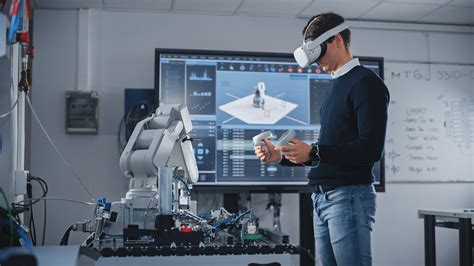
Microsoft’s Azure Lab Services and VR toolkits facilitate on-demand virtual environments for hackathons, demos, and R&D, allowing multinational teams to prototype without physical shipments or travel. This aligns with global trade’s push for resilient supply chains, as seen in remote physics labs simulating microgravity for aerospace firms or chemistry experiments for pharmaceutical exporters. By integrating with Microsoft ecosystems, these labs reduce dependency on hardware imports, potentially cutting costs by 30-50% in training for emerging markets like South Africa’s manufacturing sector.
Innovation Gaps Exposed
Despite strengths in education—over 240 experiments in biology, chemistry, and physics—Microsoft’s VR efforts lag in enterprise-scale adoption compared to rivals like HTC Vive. Historical hesitancy, including mixed messaging on consumer VR, has confined labs to academia rather than trade-critical uses like virtual trade fairs or tariff negotiation simulations. Trade magazines should urge Microsoft to prioritize API openness for third-party logistics firms, unlocking VR for real-time global tendering.
Path Forward for Global Commerce
Policymakers and traders must advocate for subsidized VR lab access in developing economies to bridge digital divides, fostering equitable participation in forums like the WTO. Microsoft could lead by expanding HoloLens integrations for portable, mixed-reality trade desks, turning VR Labs into a $10B opportunity by 2030. Failure to scale risks ceding ground to agile Asian VR players, stalling Western dominance in immersive trade tech.
Microsoft’s VR Labs: Unlocking Global Trade’s Immersive Frontier
 aldridge capital